




[ad_1]

Assessing vulnerability of fish and invertebrates to climate change in the southeast
by NOAA Fisheries 15 Nov 19:24 UTC
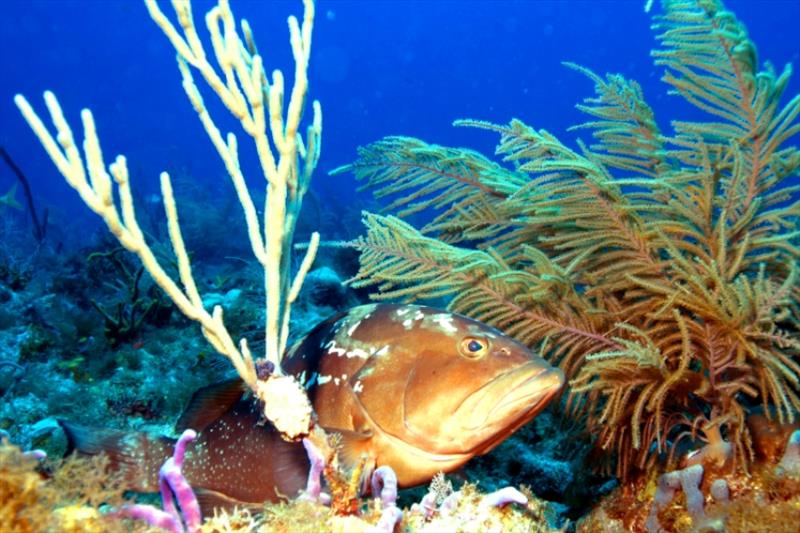
Red grouper on a reef © NOAA Fisheries


NOAA Fisheries published two new assessments of climate vulnerability for fish and invertebrates in the Gulf of Mexico and South Atlantic Large Marine Ecosystems.
While all of the species assessed are projected to face significant exposure to climate-driven changes, some are expected to be much more susceptible than others.
Climate change is significantly impacting our global ocean ecosystems. Warming seas and changing ocean chemistry are driving changes in the distribution, abundance, life cycles, and population dynamics of marine life. These changes are already impacting businesses and communities that depend on marine resources and are expected to increase with continued changes in the planet’s climate and ocean systems.
To understand how climate change is anticipated to affect important fishery species, we initiated a series of Climate Vulnerability Assessments. Most recently, the Southeast Fisheries Science Center led assessments for both the Gulf of Mexico and South Atlantic Large Marine Ecosystems. The reports identify fish and invertebrates that are most vulnerable to projected climate impacts, the primary drivers of these vulnerabilities, and which species are expected to be more resilient.
How the assessment worked
We compiled species-specific biological information along with future projections of climate and environmental data. Then, a large team of experts used a standardized guide to score each species of interest. This resulted in an overall ranking from very high vulnerability to low vulnerability for each species or group of species assessed.
The teams assessed 75 species of fish and invertebrates in the Gulf of Mexico and 71 species in the South Atlantic Large Marine Ecosystem, ranging from oysters to deepwater grouper. These species were chosen to include those that are actively exploited and managed, play a significant role in the ecosystem, or have protected status.
Takeaways
John Quinlan, Research Fish Biologist and lead author on the Gulf of Mexico assessment, summarized that with anticipated changes in climate, “These areas are projected to become substantially warmer, saltier, more acidic, and less oxygenated. This means that there could be multiple stressors operating across the southeast and we’ll need to be aware as the system shifts.”
Gulf of Mexico
The dominant biological aspects driving vulnerability for Gulf species included:
- Population growth rate
- Early life strategies (larval stage, survival, dispersal, settlement requirements)
- Spawning and reproduction
- Stock size
Unsurprisingly, the primary environmental factors of concern in the Gulf included sea surface temperature, ocean acidification, sea surface salinity, and dissolved oxygen. Climate vulnerability scores for the Gulf of Mexico were:
- Very high or high vulnerability: 20 percent of stocks
- Moderate vulnerability: 28 percent of stocks
- Low vulnerability: 52 percent of stocks
Some of the most vulnerable groups in the Gulf of Mexico include sharks and rays (including endangered smalltooth sawfish), grouper, oysters, and snook. Species such as Gulf menhaden, shrimp, vermillion snapper, cobia, Spanish mackerel, speckled sea trout, and amberjack were in the low vulnerability category. These species may have some resilience to climate change despite large environmental exposures.
South Atlantic
In the South Atlantic Large Marine Ecosystem, sea surface temperature, ocean acidification, and sea surface salinity had the greatest impact on species.
For almost two-thirds of species assessed, overall climate vulnerability was high or very high. More than half of species assessed had high or very high potential for changes in distribution, a phenomenon already occurring farther north along the U.S. Atlantic coast. Climate vulnerability scores for the South Atlantic LME were:
- Very high vulnerability: 31 percent of stocks
- High vulnerability: 34 percent of stocks
- Moderate vulnerability: 35 percent of stocks
Some of the most vulnerable groups here include deepwater reef fish, fish with portions of their lifecycle in both freshwater and saltwater (such as striped bass), and invertebrates.
What’s Next?
Many commercial fish stocks, ecologically important groups, and culturally iconic species were included in these assessments including deepwater groupers, inshore sport fish, and oysters. Climate vulnerability assessments can help improve stock assessments for these animals and inform fisheries management decisions. They can also be used to identify actions that might increase certain species’ resilience to climate change.
“Some species, such as sturgeon, are considered very vulnerable, while others – menhaden, for instance, are better off and may be rather resilient. So a user of the information can see where their species is relative to others in the mix. They can also delve a bit deeper and see what’s behind the ranking,” said Quinlan.
Additionally, we can use this information to identify knowledge gaps and prioritize future research efforts. Better understanding of how climate change and its cascading effects will impact fish and invertebrate stocks can help us plan for adaptive management strategies to help sustain healthy marine ecosystems into the future.
These reports were published as NOAA Technical Memoranda and involved participation and authorship from various NOAA offices and programs, numerous academic institutions, several other state and federal agencies, as well as non-governmental organizations.
You can explore Climate Vulnerability Assessment data for fish and invertebrates in the Southeast and other stocks with NOAA Fisheries’ new Climate Vulnerability Assessment Tool.


[ad_2]
Source link


